5 Rules to Become Immune to Marketing
Trust me, I know how the sausage is made

I’ve been working in online marketing for 15 years. And if you spend any time online, you can probably already, intuitively, tell that most of the internet is just a hamster-wheel of consumption, designed to leave you feeling empty and constantly wanting more.
But all hope is not lost!
You don’t have to be a casualty in the digital war for your attention, you just need to learn their rules of engagement.
Here are 5 rules to help you become immune to online marketing:
1. One Sentence Persuasion
There is a popular book by Blair Warren, called The One Sentence Persuasion, and it goes like this: “People will do anything for those who encourage their dreams, justify their failures, allay their fears, confirm their suspicions, and help them throw rocks at their enemies.”
In sales, this is understood intuitively, because it’s the ultimate playbook for persuasion.
(It took me less than 3 minutes to find these posts in this Reddit community. I didn’t want to link to actual manosphere creators, in fear of giving them any more attention.)
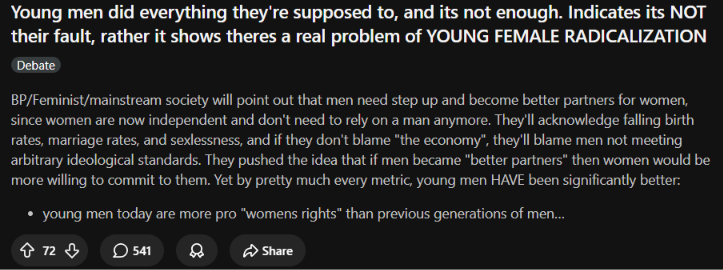
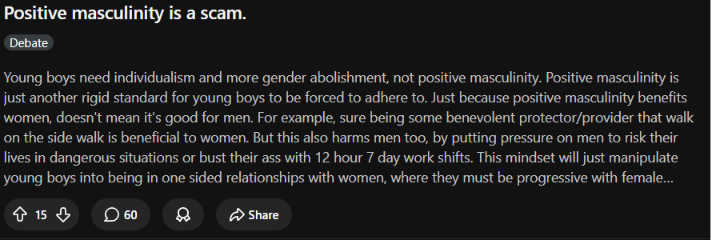
The “manosphere” is an obvious example of this. It’s essentially a massive pyramid scheme for the insecure that exploded because of the sheer scale of the internet.
Once you start paying attention to the marketing copy out there, you’ll spot this exact formula everywhere… and once you can see the strings, the puppet master loses its grip.


2. Ask “Who Benefits?”
You’ve probably heard the saying: If the product is free, you are the product.
To stick with the manosphere example for a second... don’t just ask why young men are so angry; ask who benefits from keeping them that way. This goes way beyond just capturing your attention to sell you ads. Think bigger. Are people easier to control and monetize when they’re isolated, angry, and feel like they have nothing to lose? Absolutely.
The fact that this polarizing content magically finds its way into your feed before you even go looking for it should tell you everything you need to know about how deliberate this pipeline really is.
Again, ask yourself: who benefits? Not you, that’s for sure.
3. The Internet is Wilder than the Wild Wild West
We’ve been conditioned to think “Big Pharma” is the ultimate villain because it’s a massive $2 Trillion industry, BUT! at least it’s (mostly, somewhat, kinda) regulated.
Meanwhile, the “Wellness Industry” is a $7 Trillion market operating in the ultimate Wild West.
Most of the claims you see online are entirely unregulated. It’s easy to be cynical about corporations, but we lower our guard for independent wellness gurus.
I’m not defending Big Pharma by any means, but if you want the truth, you have to follow the money. (If you want to see a great breakdown of this, check out Doctor Mike’s video on the topic).
4. Beware of “Commercial Catfishing”
We all want to support the little guy. But be mindful of massive conglomerates secretly wearing the skin of small, indie brands.
Just because a package uses a rustic, “home-grown” font doesn’t mean Ben or Jerry are actually in the back churning your ice cream. It’s all marketing.
Tom’s of Maine? Owned by Colgate-Palmolive.
Justin’s Peanut Butter? Owned by the makers of SPAM.
Burt’s Bees? Clorox.
Ben & Jerry’s? Sold out to Unilever.
Aunt Jemima? PepsiCo. (They changed the name due to the backlash, but Pepsi milked that cow for as long as it could.)

Supporting genuine small businesses is one of the few levers we can pull to make capitalism actually work for us. But you have to do your due diligence to make sure it’s actually a small business you’re giving your money to.
5. Touch Grass
If you do nothing else, do this. Turn off your screen and go outside.
Remember that the internet is not real life. It’s a curated, monetized distortion of it. (Real life is the one you can actually touch, in case you forgot)